
Most Wheel traders think the difficult part is finding trades.
It isn't.
The difficult part is rejecting them.
Every week I screen dozens of companies. Some have clean charts. Some offer attractive option premiums. Some look technically sound. Many even pass the first layers of my framework.
Most never become trades.
That isn't a flaw in the process.
It is the process.
The goal isn't to maximize the number of positions opened. The goal is to deploy capital only when the combination of assignment quality, market conditions and premium creates a trade worth taking.
This particular week ended with zero new positions.
Not because there were no stocks to analyze.
Because nothing deserved capital.
The Goal Isn't to Find Trades
Most investing content revolves around finding opportunities.
The next breakout.
The highest premium.
The hottest stock.
My process works in the opposite direction.
It starts by assuming every trade should be rejected.
Each stock then has to earn its way through multiple filters.
Does the business make sense?
Is the chart structurally clean?
Would I genuinely be happy owning the shares if assignment happens?
Does the premium justify locking up capital?
Only after passing every question does a trade exist.
Most never get there.
Earnings Come First
The fastest way for a trade to disappear is earnings.
If the company reports earnings during the life of the option, the analysis stops immediately.
The chart doesn't matter.
The premium doesn't matter.
The AI analysis doesn't matter.
The trade ends before it even starts.
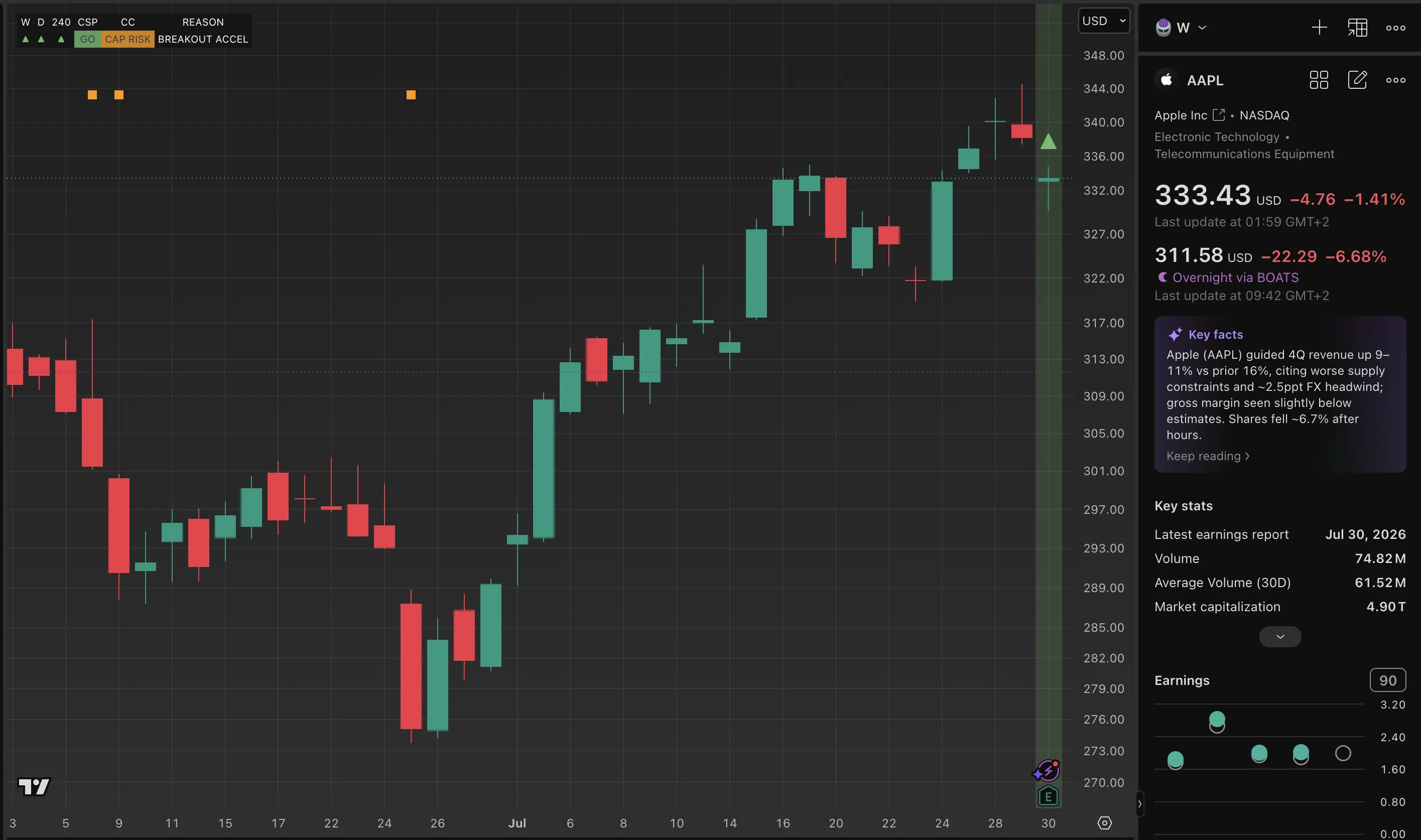
During this review several interesting companies, including Apple, AbbVie, Merck and Exxon, never reached the detailed analysis stage for one simple reason.
They were reporting earnings.
That single rule removed them from consideration before I even opened the options chain.
The premium around earnings isn't compensation for normal market movement.
It's compensation for event risk.
That's a different trade.
And it's not part of my Wheel strategy.
Premium Is Compensation
One of the easiest mistakes in options trading is believing that a higher premium automatically creates a better opportunity.
It doesn't.
Premium is compensation.
Not a reason.
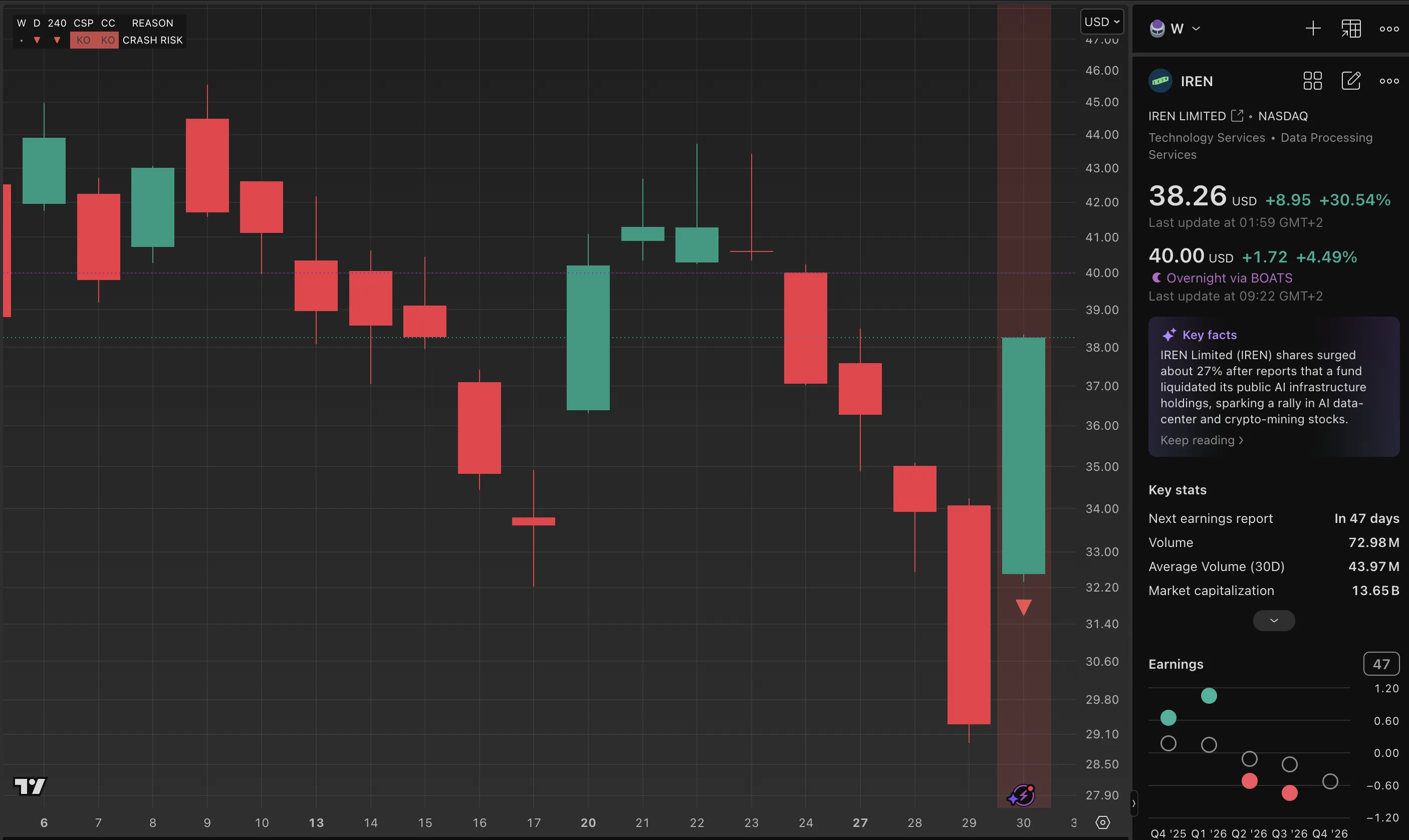
When option premiums expand dramatically, the market is usually pricing uncertainty.
Sometimes that's earnings.
Sometimes it's macro risk.
Sometimes it's company-specific news.
The premium isn't offering free money.
It's charging more for accepting more uncertainty.
High premium doesn't create edge.
It creates a question.
What exactly am I being paid to absorb?
If the answer isn't obvious, the trade usually isn't worth taking.
A Great Company Doesn't Automatically Create a Great Trade
This is where many traders become frustrated.
You find an excellent business.
The chart looks healthy.
Support is intact.
The AI analysis is favorable.
Everything appears to line up.
Yet the trade still gets rejected.
Why?
Because the premium isn't evaluated in isolation.
Capital has a cost.
Selling a cash-secured put means locking up buying power for several weeks.
The real question isn't:
Can I collect premium?
It's:
Is this the best use of my capital right now?
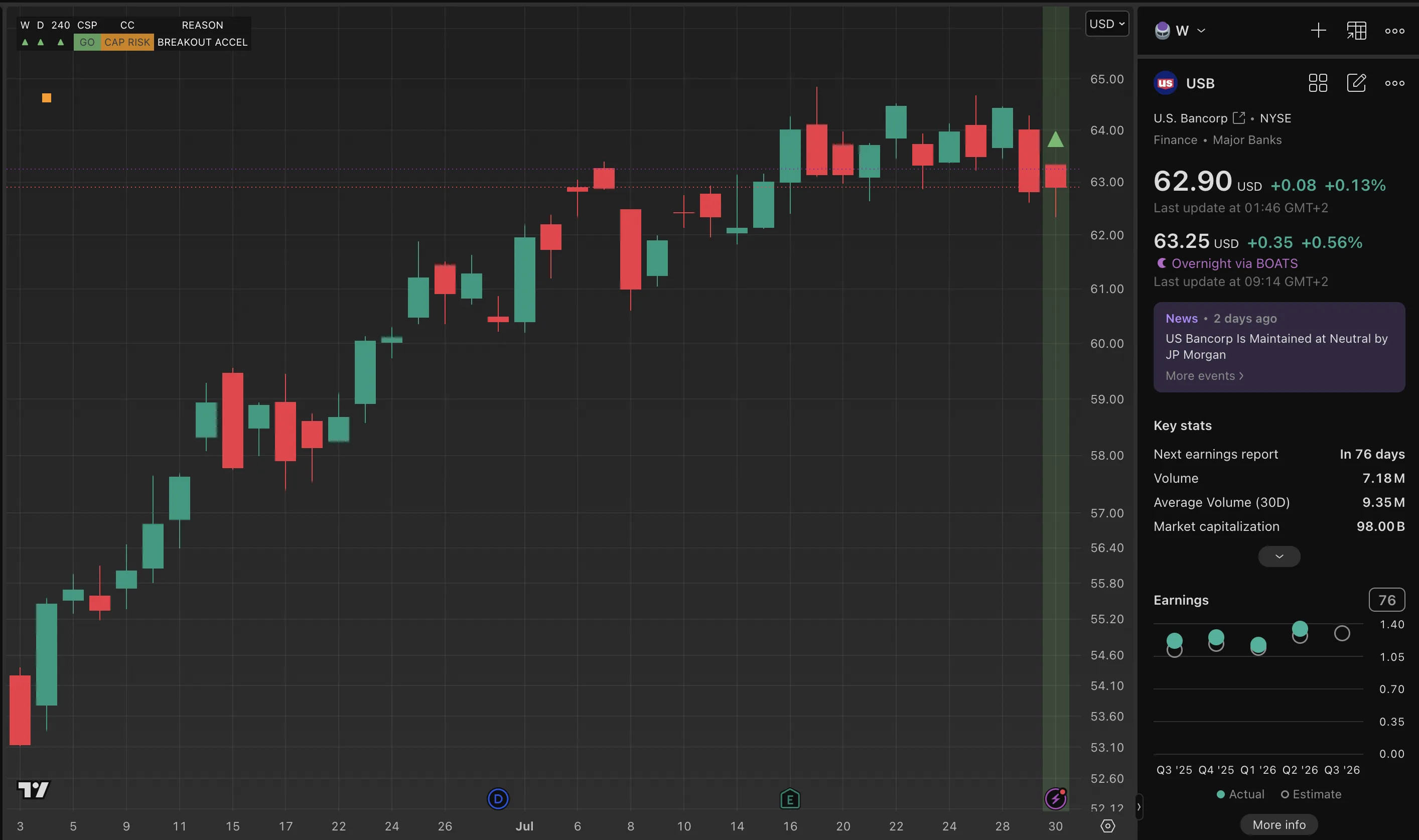
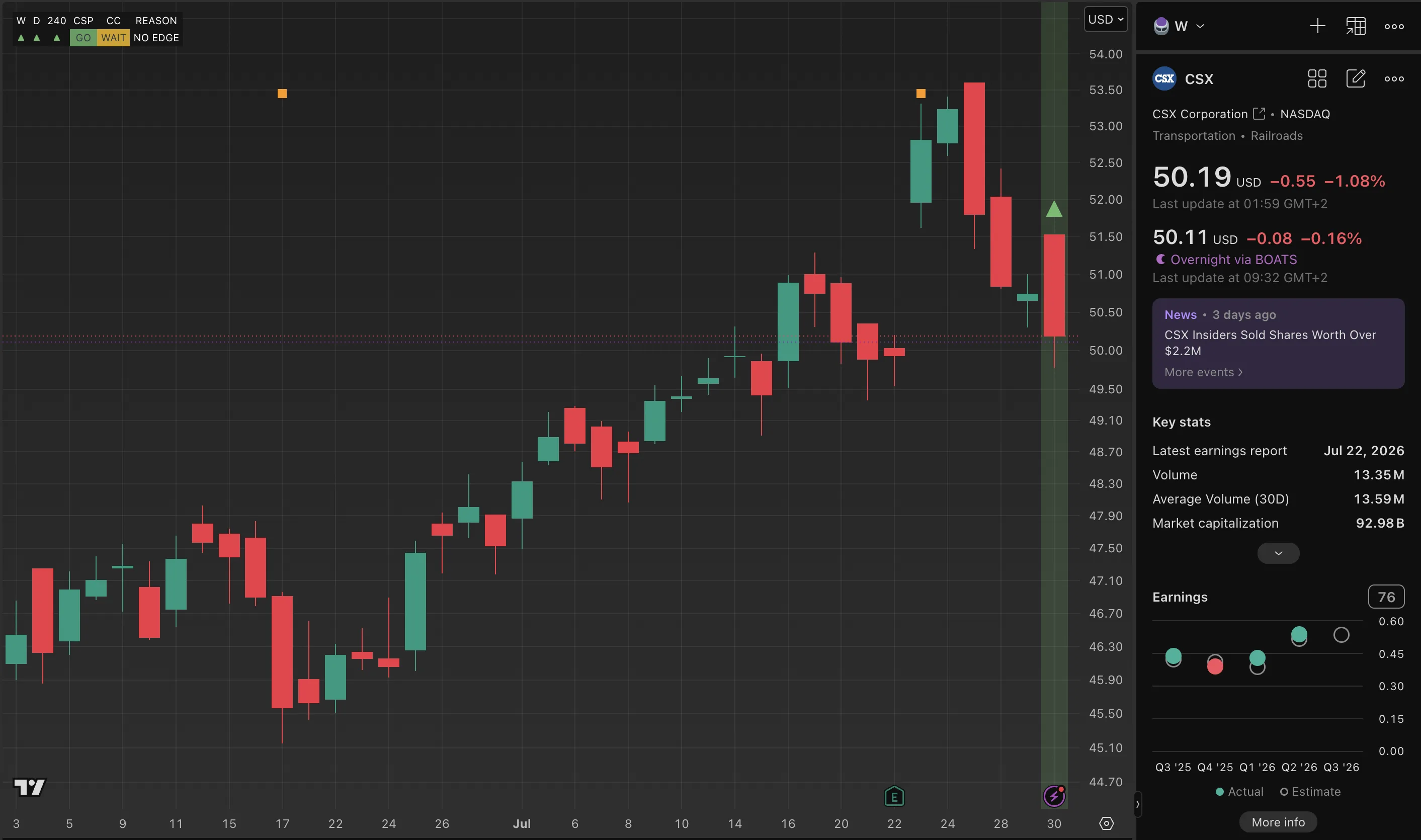
During this review, stocks like USB and CSX came very close.
Both were companies I'd happily own.
Both showed constructive technical structure.
Both produced reasonable option chains.
But neither offered enough compensation relative to the capital required.
Good companies.
Reasonable trades.
Not great opportunities.
That distinction matters more than most traders realize.
Capital Is the Scarce Resource
Most traders think they're managing premium.
They're actually managing capital.
Every position opened reduces flexibility.
Every cash-secured put commits buying power that can no longer be deployed elsewhere.
That means every new position competes against every potential future opportunity.
Not against cash.
Against better trades that haven't appeared yet.
Holding cash isn't inactivity.
It's preserving optionality.
The capital you don't commit today may become the capital that allows you to take an exceptional setup tomorrow.
Good Isn't Good Enough
One of the biggest lessons from this week was how many stocks fell into an uncomfortable middle ground.
Nothing looked terrible.
Several charts looked promising.
A few almost became trades.
Almost.
But almost isn't enough.
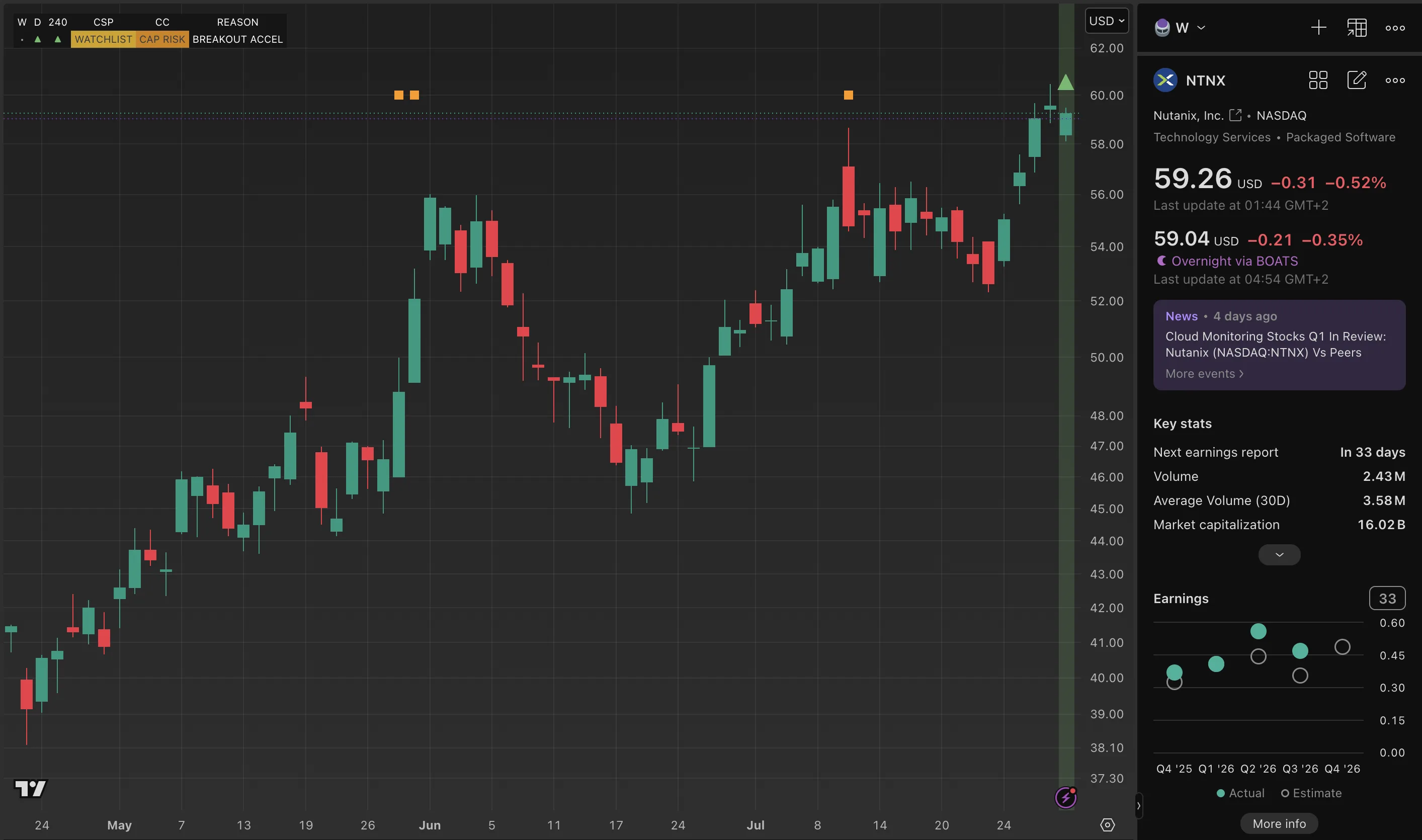
Selling puts after extended breakouts meant accepting assignment closer to recent highs while collecting relatively little premium.
Other stocks held support, but broader market uncertainty made the available premium less attractive than it initially appeared.
Some companies were fundamentally excellent.
The pricing simply wasn't.
That's where discipline matters.
The framework isn't trying to maximize activity.
It's trying to maximize decision quality.
No Trade Is Still Execution
By the end of the review the result looked almost disappointing.
Zero trades.
No premium collected.
Nothing added to the trade log.
From the outside, it looked like nothing happened.
Internally, the framework had done exactly what it was designed to do.
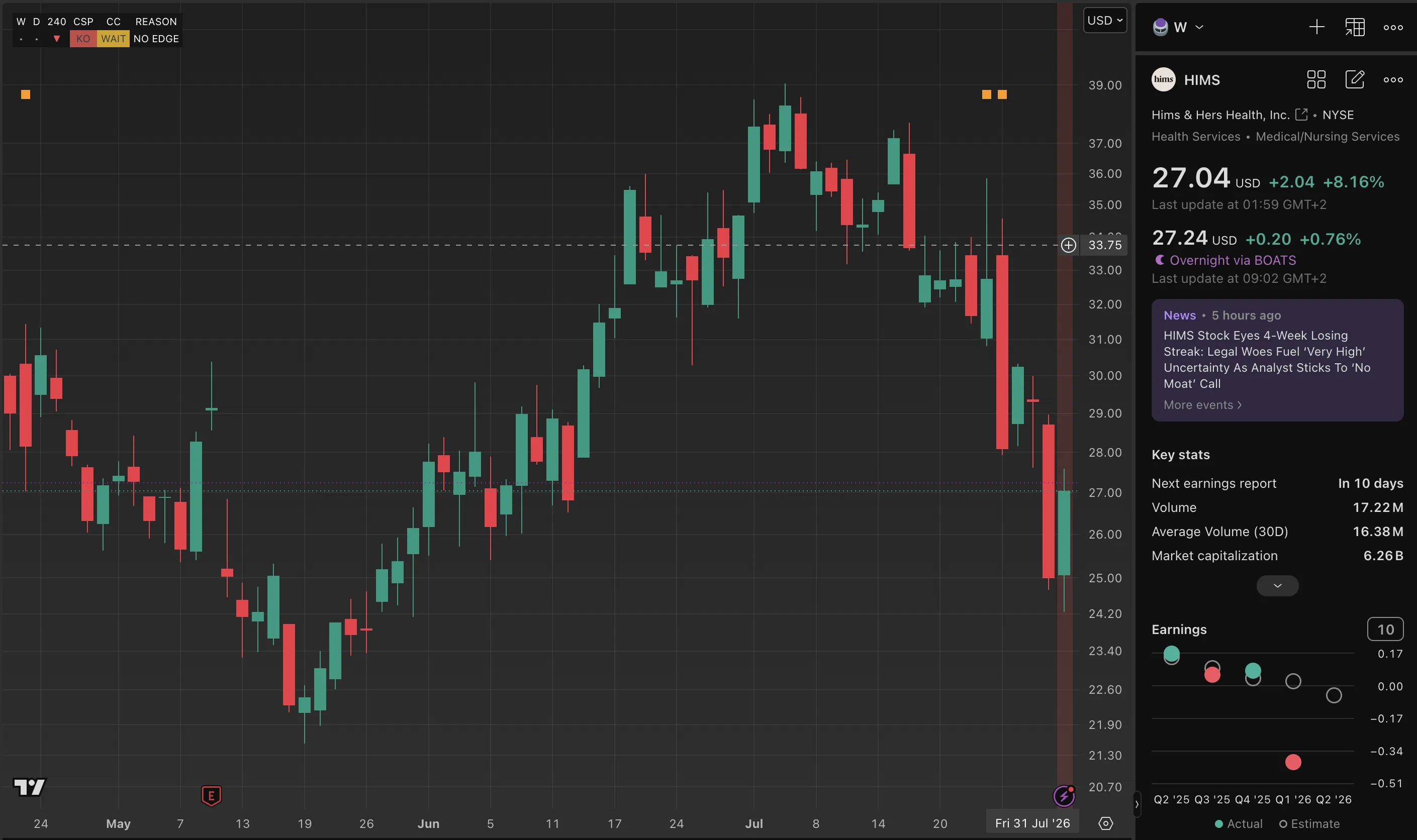
It rejected weak pricing.
It rejected earnings risk.
It rejected unnecessary uncertainty.
It rejected trades that were merely good instead of truly exceptional.
The Bottom Line
Most traders judge a strategy by the number of trades it produces.
I judge mine by the quality of the trades it refuses to take.
Every position you don't open leaves capital available for the one that actually deserves it.
Sometimes patience produces the highest return.
Sometimes discipline means closing the options chain without placing an order.
And sometimes the most valuable trade of the week is the one you never make.
Continue the Process
If you want to see how this framework works in real market conditions, continue here:
- Read the complete Wheel Strategy Guide.
- Learn the Wheel Strategy by Trading SOFI 4 Times.
- Browse the Trade Log.
- Read the latest Weekly Log.
- Subscribe to the Weekly Newsletter.
Every week, new companies enter the watchlist.
Every week, new opportunities appear.
Not every week deserves a trade.
The market changes.
The watchlist changes.
The process doesn't.
// WIZOLVER.LOG — NOT FINANCIAL ADVICE. Options trading involves substantial risk. This website documents a personal research process and should not be considered investment advice. Always perform your own due diligence.